
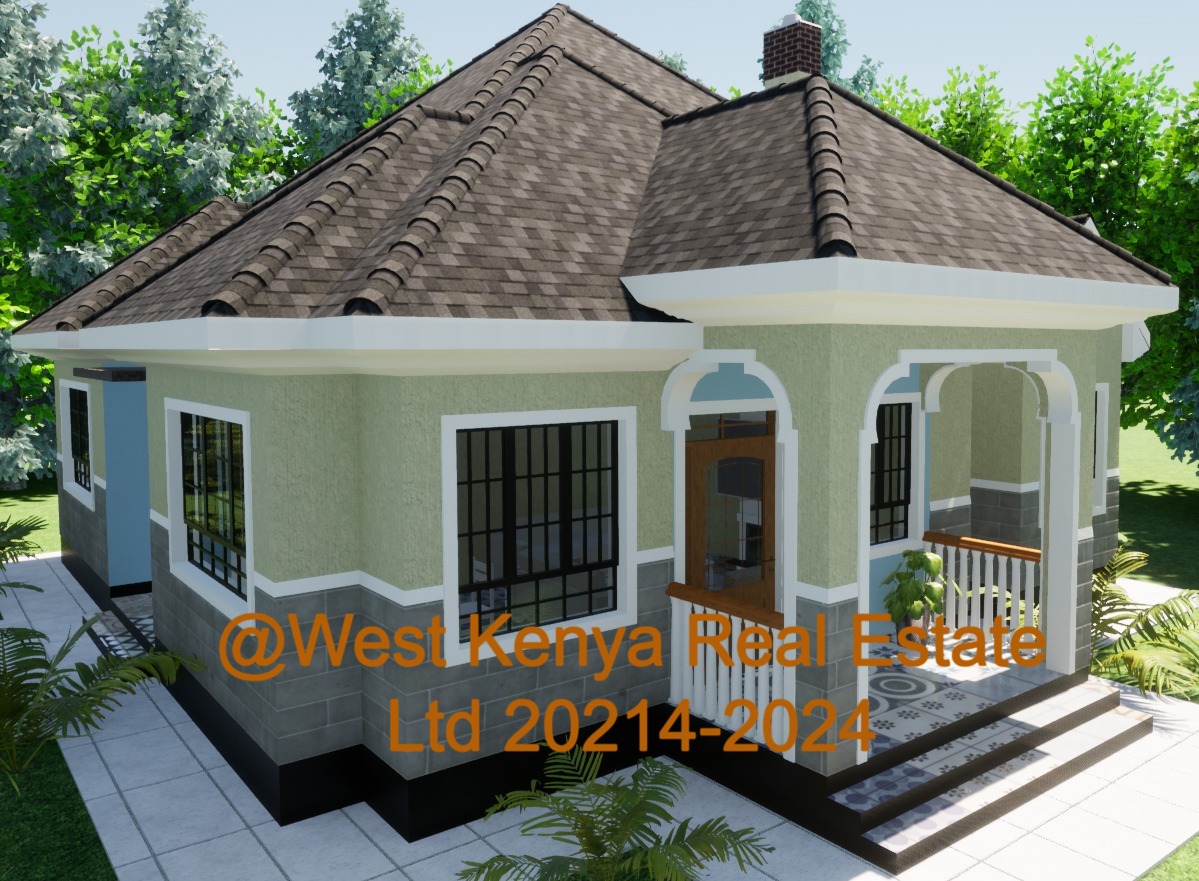
Discover 20 affordable and beautiful simple house designs in Kenya — from cosy mabati bungalows and 2‑bedroom starter homes to compact 3‑ and 4‑bedroom maisonettes — including cost estimates (2025), material tips, and how to choose the right design for your budget and plot.
Introduction
Simple house designs in Kenya have become increasingly popular because they combine affordability, functionality, and modern aesthetics. Many Kenyans are choosing these homes for their cost-efficiency, flexible layouts, and ease of construction.
This article explores 20 practical simple house designs in Kenya, including cost guidance, planning tips, and ideas for both rural and urban plots. By the end, you’ll know which design suits your family size, plot, and budget.
Why Simple House Designs Are Popular in Kenya
Affordability — Lower construction and maintenance costs
Simple house designs in Kenya are favored for their lower construction costs compared to larger or more complex builds. Smaller layouts and fewer decorative elements mean you save on materials and labour. Maintenance is also easier and cheaper, which is ideal for first-time homeowners or those on a tight budget.
Use of local and cost-efficient materials
Many simple houses in Kenya use locally sourced materials such as mabati sheets, interlocking blocks, and locally made bricks. These materials are not only affordable but also reduce transport costs. Using local materials ensures the house suits the climate and requires less long-term maintenance.
Flexibility — Small starter homes, expandable designs, rural vs urban suitability
Simple house designs are flexible enough to suit different needs. They can be small starter homes for singles or couples, expandable layouts for growing families, or compact designs ideal for urban plots. In rural areas, simple houses can adapt to larger plots while keeping costs low.
Internal linking suggestion: Link to “Expandable House Designs in Kenya” or “Small Plot House Plans Kenya.”

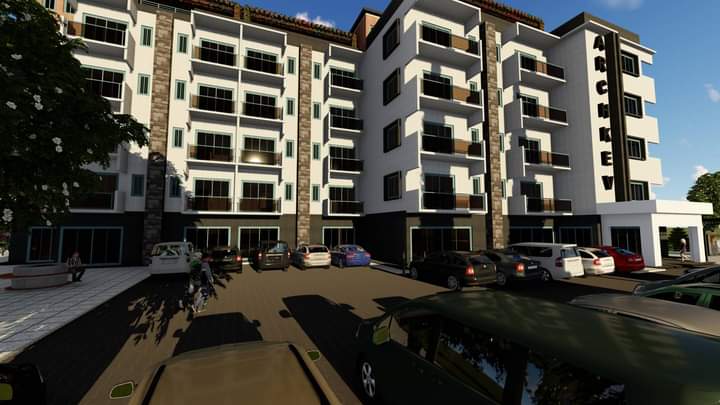
Key Cost Drivers When Building a Simple House in Kenya
Size and layout (1‑bedroom, 2‑bedroom, 3‑bedroom, 4‑bedroom)
The size and layout of your house are among the biggest cost drivers when building a simple house in Kenya. A compact 1‑bedroom or 2‑bedroom house requires fewer building materials — less walling, roofing, flooring, and fewer doors and windows — which naturally reduces overall cost. As you move to a 3‑ or 4‑bedroom layout, the number of rooms, walls, windows, sanitary facilities, and overall footprint increases, which drives up the cost per square metre and total build cost. Also, complex layouts with multiple corners or irregular shapes demand more labour and materials, making simple rectangular or square footprints more cost-efficient.
Materials & finishes — from basic mabati to mid‑range blocks, finishes, roofing, plumbing, etc.
The materials and finishing level greatly affect the cost when building simple house designs in Kenya. Choosing low-cost materials like mabati roofing, basic block walls, and minimal plumbing keeps costs low, whereas mid-range or higher-quality materials — better blocks, tiled floors, quality plumbing, durable roofing, and premium fixtures — increase the cost per square metre. These choices also influence the long-term durability and maintenance requirements of your home, making material selection crucial.
Labour, location, and “hidden” costs (transport, permits, soil tests, finishing, infrastructure)
Labour, location, and hidden costs can significantly impact the total cost of building a simple house in Kenya. Urban areas tend to have higher labour and material transport costs than rural areas. Hidden costs like permits, soil tests, site preparation, finishing, and connecting to utilities should also be budgeted for. These additional expenses often surprise first-time builders, so including them in your initial budget ensures you avoid financial strain during construction.
Level of finishes — low‑end vs mid‑range vs more finished builds (impact per m²)
The level of finishes directly influences the price per square metre of a simple house in Kenya. Low-end finishes, such as simple flooring, basic plumbing, and mabati roofing, help keep costs minimal. Mid-range finishes improve comfort and durability, while high-end finishes, including tiles, quality sanitary fittings, decorative touches, and premium paint, increase overall costs substantially. Choosing the right finish depends on your budget, lifestyle, and long-term plans for the house.
Typical Cost Ranges in Kenya (2025 Estimates)
In 2025, using per-square-metre cost estimates is a practical way to calculate the total cost of building a simple house in Kenya.
- Low-end finishes: Approximately KES 40,000 to 50,000 per m², suitable for basic 1‑ and 2‑bedroom homes (Affordable House Plans Kenya).
- Mid-range finishes: Around KES 55,000 to 65,000 per m², ideal for standard 3‑bedroom bungalows (2- and 3-Bedroom House Cost Guide).
- High-end finishes: Above KES 70,000–95,000 per m², typically for more finished builds or larger 4‑bedroom homes (High-End Simple House Plans Kenya).
For practical examples:
- A small 1‑bedroom or 2‑bedroom house (~50–70 m²) at low-end finishes costs roughly KES ~2 M – 3.5 M.
- A 3‑bedroom bungalow (~100–120 m²) with mid-range finishes may cost KES ~5.5 M – 7.8 M.
- A larger 4‑bedroom house (~150–180 m²) at standard-to-mid finishes could cost KES ~8 M – 12 M+, depending on location and materials.
Location matters: urban builds in Nairobi or Mombasa tend to be more expensive due to higher labour and transport costs, while rural areas are generally cheaper though transport and logistics may offset some savings.

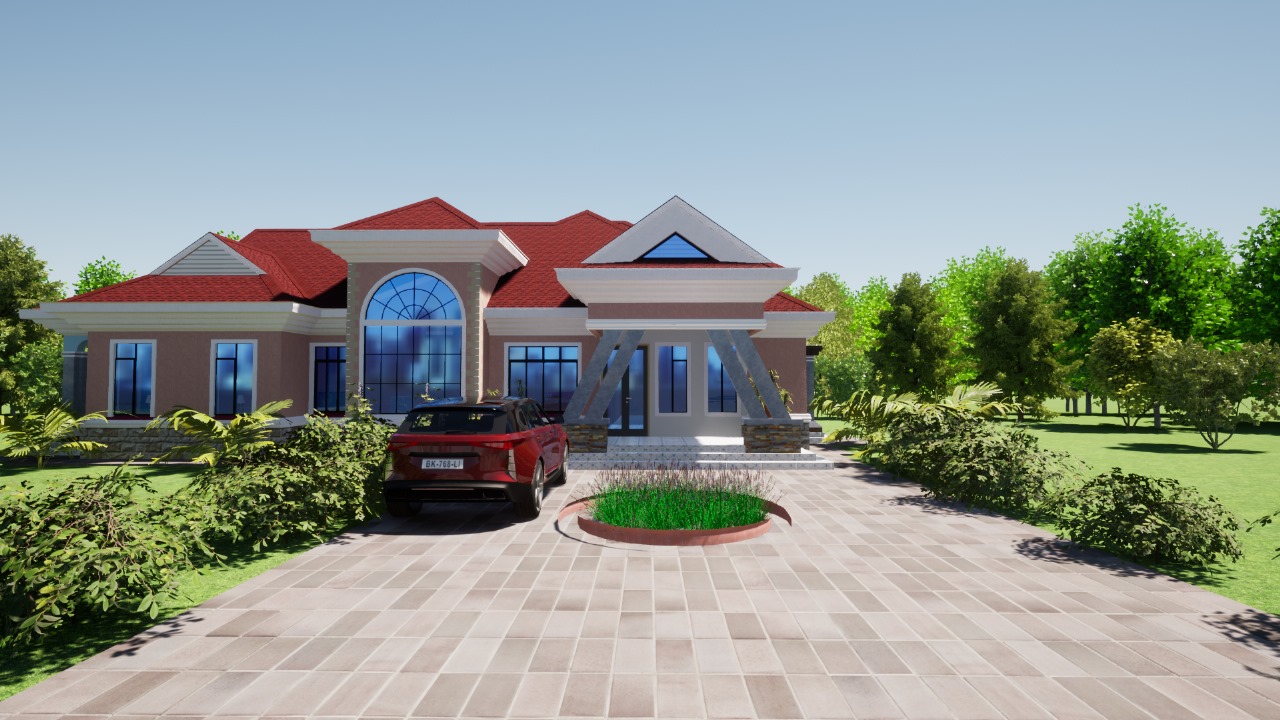
20 Affordable & Beautiful Simple House Designs in Kenya
1‑Bedroom Compact/Starter Unit (mabati or block) — ideal for singles or couples
This 1‑bedroom compact house is designed for singles or couples who want an affordable starter home without compromising on comfort or functionality. It can be built using mabati sheets or low-cost blocks, making it quick and inexpensive to construct, and it fits well on small rural or semi-urban plots. Despite its small footprint, the layout provides all essential living spaces, and homeowners can expand the house later as their budget and needs grow.
2‑Bedroom Starter Bungalow — small family or first home
The 2‑bedroom starter bungalow is ideal for small families or first-time homeowners who want a simple but practical home. Its straightforward layout ensures that construction costs remain low while still providing enough space for a growing family. This design is flexible and can be adapted to urban or rural plots, making it a popular choice for families seeking a cost-effective yet comfortable living environment.
2‑Bedroom Mabati/Prefab House — ultra-budget, quick to build (rural)
This 2‑bedroom house uses mabati sheets or prefabricated materials to minimise construction time and costs, making it ideal for rural areas where quick builds are advantageous. Its modular design allows homeowners to easily expand the house later, while the lightweight materials reduce labour costs and speed up construction. The design is also suitable for temporary or phased builds without sacrificing essential functionality.
2‑Bedroom + Loft/Small Plot Urban House — for small urban plots/young professionals
The 2‑bedroom house with a loft is designed to maximise vertical space on small urban plots, making it an excellent choice for young professionals or small families living in cities. The loft provides additional storage or sleeping space without increasing the land footprint, while the compact design ensures affordability and practical use of every square metre. This approach allows homeowners to enjoy comfortable living even on limited land.
3‑Bedroom Bungalow (compact layout) — balanced cost and comfort
The 3‑bedroom compact bungalow strikes a perfect balance between cost-efficiency and family comfort, making it ideal for medium-sized households. Its simple rectangular layout minimises construction complexity while providing spacious living and bedroom areas. This design is flexible enough to be built in both urban and rural locations and allows for future extensions if the family grows.
3‑Bedroom Small / Narrow‑Lot House — space-efficient for tight plots
This narrow-lot 3‑bedroom house is optimised for small urban plots where space is limited, featuring a one-sided firewall design that maximises the usable area. Despite the tight footprint, the design includes well-proportioned living spaces, bedrooms, and bathrooms, offering both functionality and privacy for families. Its efficient layout makes it a cost-effective option for city dwellers who want a practical home without overspending on land.
3‑Bedroom Mabati + Brick / Block Hybrid House — affordable yet more permanent
Combining mabati roofing with brick or block walls, this 3‑bedroom hybrid house offers an affordable yet durable solution for families seeking semi-permanent housing. The hybrid materials reduce overall costs while maintaining structural integrity, and the design provides enough bedrooms and common areas for comfort. This type of build is also suitable for both urban and rural plots where long-term durability is a priority.
3‑Bedroom Soil‑Press Interlocking Brick House — cost-saving method for durable build
The 3‑bedroom soil-press interlocking brick house uses eco-friendly and cost-efficient interlocking blocks to reduce material and labour costs while providing a durable and long-lasting home. Its design is ideal for rural areas, where these materials are readily available and inexpensive. This approach allows homeowners to build a solid, energy-efficient house without exceeding their budget.
3‑Bedroom Simple Maisonette / Compact 2‑Storey House — for urban plots / maximising footprint
This compact 2-storey maisonette is perfect for urban plots where land is limited and families need additional bedrooms. The design maximises vertical space to create more living areas without expanding the plot, making it ideal for investment or rental purposes. The layout includes all essential rooms, offering functional and comfortable living while keeping construction costs moderate.
3‑Bedroom Flat‑Roof Bungalow / Modern Flat‑Roof House — for modern aesthetic, easier roof work
The 3‑bedroom flat-roof bungalow provides a contemporary look and simplifies roofing construction compared to traditional pitched roofs. Its design is suitable for both urban and semi-urban plots, and the flat roof allows future additions or rooftop spaces. This style combines modern aesthetics with cost-effectiveness, offering a stylish yet affordable home solution.
4‑Bedroom Single‑Storey Bungalow (budget-conscious) — for larger families on budget
Designed for larger families, this 4‑bedroom bungalow provides ample living and bedroom spaces while keeping costs low through a simple single-storey layout. Its straightforward design minimises construction complexity and materials while ensuring a comfortable home environment. The layout can easily adapt to both rural and semi-urban plots, making it a practical choice for budget-conscious families.
4‑Bedroom Maisonette (flat-roof or compact design) — affordable 4‑bedroom maisonette option
This 4‑bedroom maisonette is a compact yet functional home ideal for urban plots where space is limited. It maximises land use while providing adequate bedrooms and living spaces for larger families. The flat-roof design allows future expansion or rooftop modifications, offering long-term flexibility.
Minimalist Urban Loft / Small Footprint House — for rental or investment on tight plots
The minimalist urban loft design provides 2 bedrooms plus a loft to maximise vertical space, making it ideal for rental properties or small family homes on limited land. Its small footprint ensures affordability while maintaining functional living spaces. Investors can use this design to generate rental income without requiring a large plot.
Rental Units / Multiplex on Shared Plot — for investors wanting rental income
This multi-unit design allows investors to build several small rental units on a single plot, maximising rental income potential. Each unit is self-contained with its own living, bedroom, and bathroom areas, offering privacy and convenience for tenants. The design is particularly suitable for urban or peri-urban plots where rental demand is high.
Prefab / Pre‑Engineered Modular Starter Home — fast build, low budget, scalable
The prefab or modular starter home uses pre-engineered components for quick assembly and lower labour costs. This design is scalable, allowing homeowners to expand their homes as funds become available, making it ideal for urban and rural areas alike. Its simple layout and modular structure ensure cost-effectiveness and durability.
Flat‑Roof Bungalow with Porch & Veranda — modest but aesthetic home
This bungalow includes a porch and veranda to enhance ventilation, natural light, and outdoor living spaces. The simple flat-roof design reduces roofing complexity, while the layout ensures comfortable living areas for small to medium families. It is suitable for both urban and rural plots seeking a modest yet visually appealing home.
Hybrid Material House (brick foundation + mabati / interlocking blocks) — balance of durability and cost
Using a brick foundation combined with mabati or interlocking block walls, this house strikes a balance between affordability and long-term durability. It is suitable for homeowners who want a sturdy home without spending excessively on high-end materials. The design works well for urban or rural plots and allows future modifications or expansions.
Expandable / Phased‑Build Home — start small, expand later
This phased-build home allows families to start with essential rooms and gradually expand as funds and needs allow. It is particularly beneficial for homeowners on limited budgets who want flexibility for future growth. The design emphasizes practical layouts and cost-effective materials to ensure a functional home from the first phase.
Rural Farmhouse‑Style Simple Home — functional rural home
The farmhouse-style simple home is tailored for rural plots, providing a spacious and practical layout suitable for agricultural or countryside living. It is durable, affordable, and easy to build using local materials, making it ideal for landowners who want a functional and aesthetically pleasing rural residence.
Compact Urban House for Small Plots — minimal land use, smart layout
Designed for city plots with limited space, this compact urban house uses a smart layout to maximise living areas while minimizing land use. It provides all essential rooms efficiently, making it perfect for small families or young professionals seeking an affordable and practical home in urban areas.


How to Choose the Right Simple House Design for Your Needs
Consider family size, lifestyle, and future growth
When choosing a simple house design in Kenya, start by assessing your family size, lifestyle, and plans for future growth. A single professional may be satisfied with a 1-bedroom compact home, while a growing family may need 3–4 bedrooms with flexible living spaces. Thinking ahead ensures that your chosen design will remain functional and comfortable for years, avoiding costly renovations later.
Match house design to plot size and location (urban vs rural)
It’s important to select a house design that fits your plot size and location. Urban plots often require compact, vertical, or phased-build layouts, while rural plots allow for more sprawling designs with larger gardens or outdoor areas. Adapting the house to the available land ensures efficient use of space and helps minimise construction and landscaping costs.
Balance budget, materials, and durability
Balancing your budget with material choices and durability is key when building a simple house in Kenya. Low-cost options like mabati or interlocking blocks reduce initial construction costs, but higher-quality materials provide better long-term durability and lower maintenance costs. Choose a design that offers the right compromise between affordability now and resilience over time.
Decide between “permanent build” vs “semi‑permanent / mabati / prefab” based on long‑term goals
Consider whether a permanent build or a semi-permanent structure suits your long-term goals. Permanent brick or block houses offer longevity and higher resale value, while semi-permanent options such as mabati or prefab houses allow faster construction and lower initial costs. Your choice should reflect your future plans, budget, and how long you intend to stay in the property.
Think about expansion — modular/phased builds if budget is limited now
If your budget is limited, think about a phased or modular design that allows you to expand later. Start with core rooms such as bedrooms, kitchen, and bathroom, and add additional rooms when funds permit. This approach ensures you have a functional home now while accommodating future growth without major disruption or extra costs.
Smart Cost‑Saving Tips When Building in Kenya
Use local materials (mabati, interlocking blocks, local stone) where appropriate
Using local materials such as mabati, interlocking blocks, or local stone can significantly reduce construction costs while supporting local suppliers. These materials are generally cheaper, readily available, and suitable for Kenya’s climate. They also minimise transport costs and provide a cost-effective way to build durable simple houses.
Keep the layout simple (square/rectangular, fewer walls) to reduce complexity and materials
A simple square or rectangular layout with fewer internal walls reduces construction complexity and lowers material and labour costs. Simple layouts are easier to build, allow for efficient space utilisation, and are ideal for homeowners looking to stay within a budget while maintaining functional living areas.
Build in phases — start with core rooms, expand later as funds allow
Phased construction lets you start with essential rooms and expand as your budget grows. This approach allows homeowners to move in faster and manage costs more effectively. Core rooms typically include bedrooms, kitchen, and bathroom, with living spaces or additional bedrooms added later.
Use basic finishes and upgrade later — avoid luxury finishing in first build
Using basic finishes in the first build keeps initial costs manageable, and you can upgrade floors, fittings, and paint later. Avoiding luxury finishes initially helps you stay within budget while still having a functional and comfortable home. This strategy is especially effective for starter homes or phased builds.
Plan for hidden costs: transport, labour, soil tests, permits, finishing
Hidden costs such as transport, labour, soil tests, permits, and finishing materials often push the total construction cost higher than expected. Proper planning and budgeting for these expenses ensures there are no surprises during construction. Factoring in these costs early is critical for completing a simple house project within budget.
Consider prefab or modular houses for speed and lower labour costs
Prefab or modular houses allow for faster construction and lower labour costs because components are pre-engineered and easy to assemble. This method reduces onsite construction time, provides quality consistency, and can be an affordable alternative to traditional brick or block houses for first-time homeowners or investors.

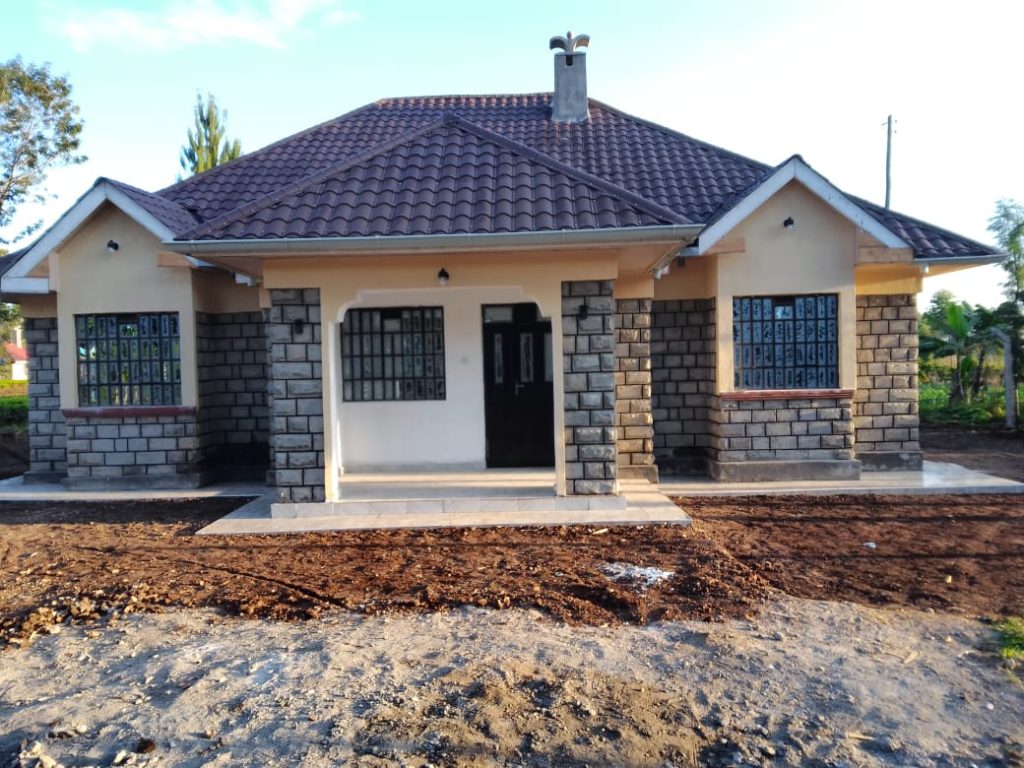
Common Mistakes to Avoid When Building Simple Houses in Kenya
Over‑complicating the design (too many corners/levels)
Many homeowners make the mistake of over-complicating their house design with multiple corners, irregular layouts, or extra levels. While these may look attractive on paper, they significantly increase construction costs, labour complexity, and build time. Choosing a simple rectangular or square layout keeps costs manageable, speeds up construction, and reduces potential errors.
Underestimating hidden costs (transport, labour, finishing, approvals)
Hidden costs such as transport, labour, finishing materials, and government approvals often catch first-time homeowners off guard. Failing to account for these expenses can lead to budget overruns and construction delays. Proper planning and budgeting for these “extra” costs ensures that your simple house project stays on track and within financial limits.
Using low‑quality materials that make maintenance expensive later
Opting for low-quality materials may save money initially but often leads to higher maintenance and repair costs over time. For example, weak blocks, cheap roofing, or low-quality plumbing can deteriorate quickly under Kenya’s climate. Investing in durable but affordable materials strikes a balance between cost-efficiency and long-term durability.
Failing to plan for expansion or future needs (family growth, rental potential)
Not planning for future expansion is a common mistake among homeowners building simple houses in Kenya. Families may outgrow their initial layout, or investors may want to add rental units later. Designing with modular or phased-build options ensures the home remains adaptable to growing needs without requiring expensive renovations.
Ignoring proper planning — soil test, approvals, realistic budget, trusted fundis
Skipping essential planning steps like soil tests, approvals, realistic budgeting, or hiring qualified and trusted fundis often results in construction delays, structural problems, or legal issues. Proper planning ensures the house is safe, durable, and compliant with local regulations, giving homeowners peace of mind and long-term value.
Conclusion
Building a simple house in Kenya does not mean settling for a basic or unattractive home. With careful planning, thoughtful material selection, and an efficient layout, you can create a beautiful and functional home that fits your budget.
When choosing a design, consider your plot size, family needs, and long-term plans, including potential expansion or rental opportunities. By combining cost-efficient design, smart use of materials, and proper planning, you can maximise value and enjoy a durable home that serves your family for years to come. Internal linking suggestion: Link to 20 Affordable & Beautiful Simple House Designs in Kenya and Smart Cost-Saving Tips for House Construction Kenya.