
Bungalow vs Maisonette: Which Is Better in Kenya? The Ultimate Homeowner’s Guide (2026)

Bungalow vs maisonette in Kenya explained in detail. Compare cost, land use, space efficiency, maintenance, security, and resale value to choose the best home design for your budget, plot size, and lifestyle needs.
Introduction: Choosing the Right Home Design in Kenya
Building a home is one of the most significant investments most Kenyans will ever make. Beyond the financial commitment, the type of house you choose will influence your lifestyle, comfort, maintenance costs, and even the future value of your property. Among the most popular residential designs in Kenya are bungalows and maisonettes, each offering unique advantages and challenges.
As the demand for home ownership continues to grow across urban and rural areas, many prospective homeowners are faced with an important question: which house design offers the best value? At the same time, rising land prices, especially in cities such as Nairobi, Kisumu, Nakuru, and Mombasa, are changing how people approach home construction. Limited plot sizes and evolving family needs have made efficient space utilization more important than ever.
A bungalow is a single-storey house that provides convenience and accessibility, while a maisonette is a multi-level home designed to maximize living space on a smaller footprint. Both options can be excellent choices depending on your budget, land size, family structure, and long-term goals.
This guide compares bungalows and maisonettes in detail, examining construction costs, land requirements, living space, maintenance, security, resale value, and investment potential to help you determine which option is better suited to your needs in Kenya.
What Is a Bungalow?
Definition of a Bungalow
A bungalow is a single-storey residential house where all living spaces, including bedrooms, bathrooms, the kitchen, dining area, and living room, are located on one floor. This type of house is one of the most popular residential designs in Kenya because it offers convenience, functionality, and a straightforward construction process. Bungalows are suitable for both urban and rural developments and can be customized to fit different plot sizes and budgets.
Common Features of Kenyan Bungalows
One of the most notable characteristics of a bungalow is its single-storey design. Since there are no upper floors, occupants can move easily between rooms without using stairs. This makes bungalows particularly suitable for families with elderly members, young children, or individuals with mobility challenges.
Many Kenyan bungalows also feature open-plan layouts that seamlessly connect the living room, dining area, and kitchen. This design approach enhances natural lighting, improves ventilation, and creates a spacious feel even within relatively compact floor plans.
Another major advantage is easy accessibility. Maintenance tasks such as roof inspections, painting, plumbing repairs, and cleaning are generally simpler and less expensive compared to multi-storey homes.
Popular Bungalow Designs in Kenya
Bungalows come in various configurations to meet different family needs and financial capacities:
- 2-Bedroom Bungalows – Suitable for couples, retirees, and small families.
- 3-Bedroom Bungalows – The most common choice among Kenyan homeowners.
- 4-Bedroom Bungalows – Ideal for larger families seeking additional space and comfort.
- Modern Luxury Bungalows – Feature spacious interiors, high-end finishes, large windows, and contemporary architectural designs.
Their simplicity, comfort, and flexibility continue to make bungalows a preferred housing option across Kenya.
What Is a Maisonette?
Definition of a Maisonette
A maisonette is a multi-storey residential house, typically consisting of two floors connected by an internal staircase. Unlike a bungalow, which spreads all living spaces across a single level, a maisonette separates different functions of the home between floors. This design allows homeowners to maximize living space while occupying a smaller land footprint, making maisonettes particularly popular in urban and peri-urban areas where land is limited or expensive.
Maisonettes are often associated with modern living, offering greater privacy, better space utilization, and a more distinctive architectural appearance. They are commonly chosen by families seeking larger homes without requiring a significantly larger plot of land.
Typical Layout of a Kenyan Maisonette
A typical Kenyan maisonette is designed to separate shared living areas from private family spaces.
Ground Floor: This level usually contains the living room, dining area, kitchen, guest bedroom, guest bathroom, and sometimes a home office or family room. It serves as the main social and entertainment area of the house.
Upper Floor: The upper level is primarily reserved for private spaces such as the master bedroom, additional bedrooms, bathrooms, and a family lounge. This arrangement enhances privacy and reduces disturbances from visitors.
Staircase Arrangement: An internal staircase connects the two floors and often serves as a central architectural feature. Modern designs may incorporate elegant staircases that add both functionality and aesthetic appeal.
Popular Maisonette Designs
Common maisonette designs in Kenya include:
- 3-Bedroom Maisonettes – Suitable for medium-sized families.
- 4-Bedroom Maisonettes – The most popular option for growing families.
- 5-Bedroom Maisonettes – Designed for larger households and luxury living.
- Maisonettes with DSQ – Include a Detached Servants’ Quarters for domestic staff or additional accommodation.
Their efficient use of space and modern appeal make maisonettes a preferred choice for many Kenyan homeowners.
Bungalow vs Maisonette at a Glance
When deciding between a bungalow and a maisonette, it is important to compare the two options across key factors such as cost, space utilization, accessibility, maintenance, and long-term value. While both house types can provide comfortable and functional living environments, the best choice depends on your budget, land size, family needs, and future plans.
The table below provides a quick side-by-side comparison to help homeowners, developers, and investors understand the main differences between bungalows and maisonettes in Kenya.
| Feature | Bungalow | Maisonette |
| Floors | Single-storey house | Two or more floors connected by a staircase |
| Land Use | Requires a larger building footprint | Maximizes space on smaller plots |
| Construction Cost | Generally lower due to simpler design | Higher due to additional structural requirements |
| Privacy | Less separation between living and sleeping areas | Greater privacy with bedrooms typically upstairs |
| Accessibility | Excellent for children, elderly people, and individuals with mobility challenges | Staircases may limit accessibility for some occupants |
| Security | Easier evacuation during emergencies | Upper-floor bedrooms provide additional security |
| Maintenance | Simpler and often less expensive to maintain | More maintenance due to multiple levels and staircases |
| Energy Efficiency | Often easier to cool and ventilate naturally | May require more energy for cooling larger vertical spaces |
| Resale Value | Strong demand, especially among retirees and families | Often commands higher market value in urban areas |
| Best For | Large plots, retirees, and families seeking convenience | Smaller plots, growing families, and homeowners seeking more space |
Land Requirements – Which House Uses Land More Efficiently?
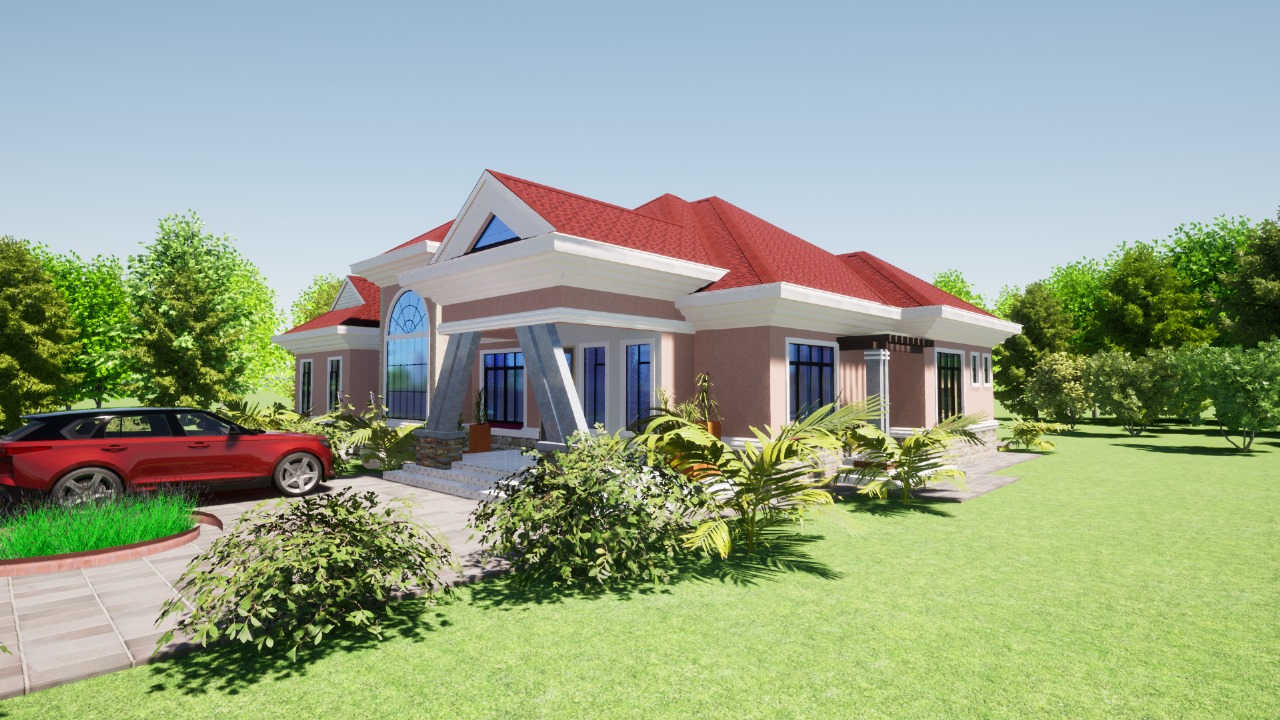
Land availability and plot size play a major role when deciding between a bungalow and a maisonette. While both house types can provide comfortable living spaces, they utilize land very differently. Generally, a bungalow requires a larger ground footprint because all rooms are built on a single level, whereas a maisonette uses vertical space to accommodate more rooms within a smaller area.
Building on a 50×100 Plot
A standard 50×100 plot is one of the most common residential plot sizes in Kenya. On such a plot, a bungalow can comfortably accommodate a 2-bedroom or 3-bedroom house while still leaving space for parking, landscaping, and future extensions. However, larger bungalow designs may consume a significant portion of the available land.
A maisonette, on the other hand, can provide substantially more floor area on the same plot because living spaces are distributed across two floors. This makes it possible to build a spacious 4-bedroom or 5-bedroom home while preserving outdoor space for gardens, parking, and recreational areas.
Building on a Quarter Acre Land
A quarter-acre plot offers greater flexibility for both house types. A bungalow can be designed with larger rooms, expansive verandas, landscaped gardens, and future expansion opportunities. Meanwhile, a maisonette can maximize luxury features while utilizing only a portion of the land, leaving ample space for outdoor amenities such as gazebos, swimming pools, or detached guest houses.
Urban vs Rural Land Considerations
In urban areas where land prices are high and plots are smaller, maisonettes are often the preferred option because they maximize usable living space without requiring additional land. Their vertical design allows homeowners to make the most of limited plots.
In rural areas where land is generally more affordable and abundant, bungalows remain highly popular due to their simplicity, accessibility, and lower construction complexity. Ultimately, if land is limited, a maisonette offers better space efficiency, while a bungalow is ideal when ample land is available and ease of living is the priority.
Construction Costs in Kenya: Bungalow vs Maisonette
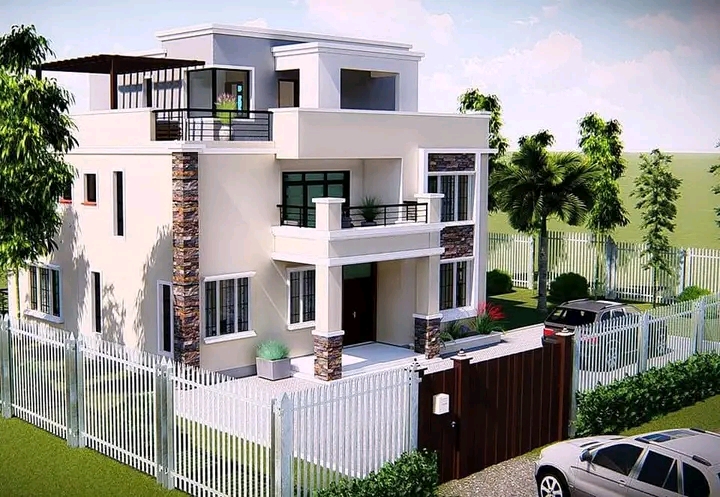
Construction cost is one of the most important factors when choosing between a bungalow and a maisonette. While both house types can be built using similar materials and finishes, the structural complexity of a maisonette generally makes it more expensive than a bungalow of comparable size.
Cost of Building a Bungalow
Bungalows are typically less expensive to construct because they have a simpler structural design. Since all rooms are located on one level, there is no need for suspended slabs, upper-floor structural elements, or staircases. The construction process is also faster and requires less specialized labor.
In Kenya, the cost of building a standard bungalow varies depending on location, design complexity, finishes, and material prices. A typical 3-bedroom bungalow often costs less than a similarly sized maisonette because of its straightforward construction requirements.
Cost of Building a Maisonette
Maisonettes generally require a higher budget due to their multi-storey design. Although they occupy a smaller ground footprint, they involve additional structural work to support upper floors. As a result, construction takes longer and requires more materials, engineering input, and skilled labor.
A 4-bedroom maisonette, for example, may cost significantly more than a 4-bedroom bungalow with similar finishes because of the additional structural components required to support the upper level.
Why Maisonettes Cost More
Several factors contribute to the higher construction cost of maisonettes:
- Foundations: Multi-storey buildings require stronger foundations capable of supporting greater loads.
- Suspended Slab: The upper floor requires a reinforced concrete suspended slab, which adds material and labor costs.
- Staircases: Internal staircases increase both construction expenses and finishing costs.
- Reinforcement: More steel reinforcement is needed in columns, beams, and slabs to ensure structural stability.
- Roofing: While maisonettes may have a smaller roof area than an equivalent bungalow, the savings are often offset by the additional structural requirements.
Cost per Square Metre Comparison
Construction costs are often measured per square metre. For example, if a family requires approximately 180 square metres of living space, a bungalow would spread this area across the ground floor, requiring a larger foundation and roof footprint. A maisonette could accommodate the same floor area over two levels, reducing land usage but increasing structural costs.
As a practical example, a homeowner building on a 50×100 plot may choose a 180-square-metre bungalow for simplicity and affordability. Alternatively, they may opt for a 180-square-metre maisonette that provides greater privacy and space efficiency but requires a higher construction budget. Therefore, the most cost-effective option depends not only on the initial construction cost but also on land availability, lifestyle needs, and long-term property goals.
Which House Offers More Living Space?
When comparing bungalows and maisonettes, many homeowners focus on the amount of usable living space each design can provide. While both can be built to similar total floor areas, a maisonette often offers more functional space on a smaller plot by utilizing vertical construction. This makes it a popular choice in areas where land is expensive or limited.
Space Utilization
A bungalow spreads all rooms across a single floor, requiring a larger ground footprint to achieve a given floor area. For example, a 200-square-metre bungalow occupies nearly the entire 200 square metres at ground level.
A maisonette, however, can achieve the same or even greater floor area by dividing the space between two floors. A 200-square-metre maisonette may occupy only about 100 square metres of ground space while providing 200 square metres of total living area. This efficient use of vertical space makes maisonettes ideal for smaller plots.
Room Distribution
Maisonettes allow homeowners to separate public and private spaces more effectively. Living rooms, dining areas, kitchens, and guest rooms are typically located on the ground floor, while bedrooms and family lounges occupy the upper floor. This arrangement improves privacy and creates a more organized living environment.
In contrast, bungalows place all rooms on one level, which can limit separation between social and private spaces.
Storage Opportunities
Maisonettes often provide additional storage options, including under-stair storage, larger closets, and dedicated utility rooms. The two-floor layout creates opportunities for maximizing every available space. Bungalows can also offer adequate storage, but they generally have fewer built-in storage possibilities.
Future Expansion Possibilities
Bungalows are often easier to extend horizontally if sufficient land is available. Additional rooms can be added without major structural modifications. Maisonettes, however, are better suited to maximizing existing land by building upward rather than outward.
For homeowners seeking the greatest amount of floor area on a limited plot, a maisonette typically offers superior space efficiency. However, those with larger plots may find a bungalow provides ample living space while maintaining simplicity and convenience.
Privacy and Family Lifestyle Considerations
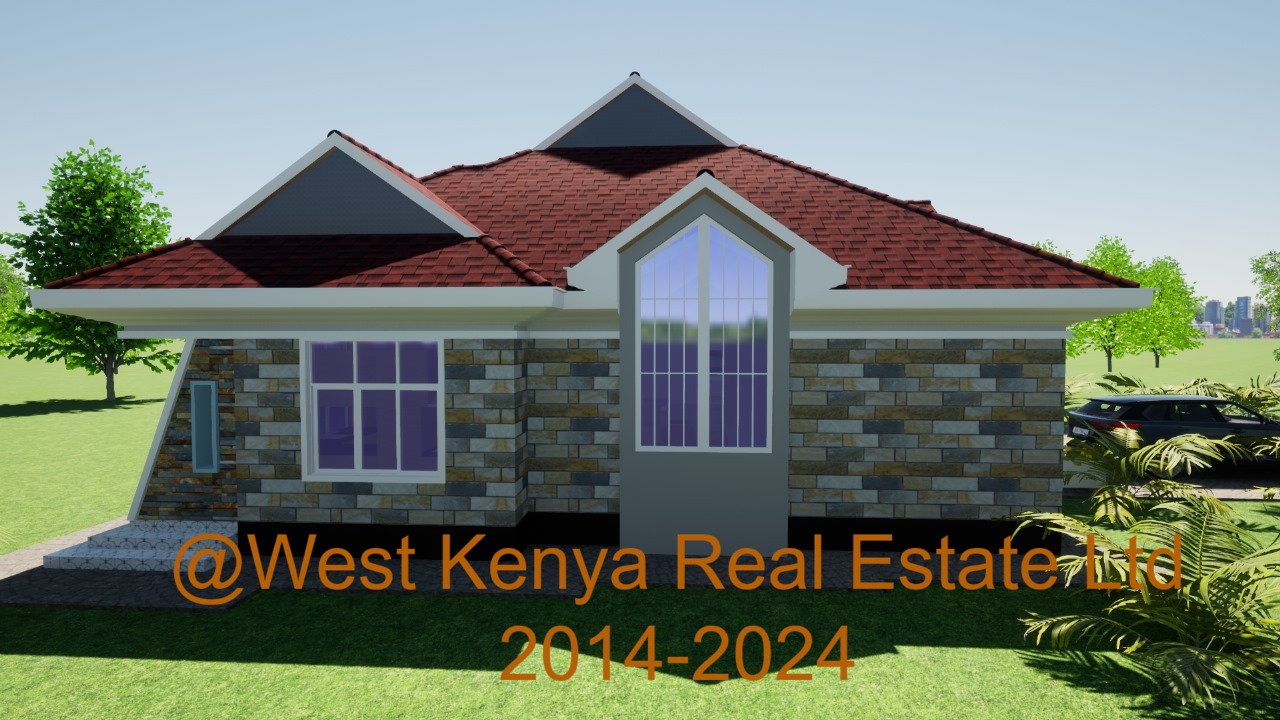
Beyond construction costs and land requirements, your choice between a bungalow and a maisonette should also reflect your family’s lifestyle, daily routines, and privacy needs. While both house types can provide comfortable living environments, they offer different advantages depending on household composition and personal preferences.
Living with Children
For families with young children, bungalows offer convenience and easier supervision since all rooms are located on one level. Parents can easily monitor children without worrying about stair-related accidents. However, as children grow older and require more personal space, a maisonette can provide greater privacy by separating bedrooms from common living areas.
Living with Elderly Parents
Bungalows are generally the preferred choice for households that include elderly family members. The absence of stairs reduces the risk of falls and makes movement throughout the home easier and safer. Individuals with mobility challenges also benefit from the accessibility and convenience of a single-storey layout.
Maisonettes may still accommodate elderly residents, but frequent use of staircases can become inconvenient over time unless a ground-floor bedroom is incorporated into the design.
Hosting Guests
Maisonettes often excel when it comes to entertaining guests. The separation between public and private spaces allows homeowners to host visitors on the ground floor while maintaining privacy in upstairs bedrooms. This arrangement is particularly beneficial for large families or homeowners who frequently entertain friends and relatives.
Bungalows can also accommodate guests comfortably, but there is generally less separation between social and private areas.
Work-from-Home Needs
The growing popularity of remote work has increased demand for dedicated home offices. Maisonettes provide more flexibility for creating quiet workspaces on a separate floor away from household activities. However, larger bungalows can also accommodate home offices, especially on spacious plots where additional rooms can be included.
Who Benefits More from Each Design?
A bungalow is often best for retirees, families with young children, and households with elderly members who prioritize accessibility and convenience. A maisonette is better suited for growing families, professionals working from home, and homeowners seeking enhanced privacy, space efficiency, and clear separation between living and sleeping areas.
Security Comparison: Is a Maisonette Safer Than a Bungalow?
Security is an important consideration when choosing between a bungalow and a maisonette in Kenya. While both house types can be made highly secure with the right measures, their structural differences influence how safety risks and protections are managed. Neither design is automatically safer than the other; instead, each presents unique strengths and vulnerabilities.
Entry Points
Bungalows typically have more direct ground-level entry points since all rooms are on the same floor. This can make them slightly more exposed if not properly secured. Maisonettes often centralize access through a main entrance and staircase, which can make controlled access easier.
Window Security
In bungalows, all windows are accessible from ground level, which may require stronger grills and reinforced frames. In maisonettes, upper-floor windows are naturally more secure due to their height, reducing the risk of forced entry, although ground-floor windows still require protection.
Perimeter Security
Both house types rely heavily on perimeter fencing, gates, and lighting. However, maisonettes may offer a slight advantage in visibility from upper floors, allowing occupants to monitor outdoor activity more effectively.
Emergency Evacuation
Bungalows generally provide easier and faster evacuation during emergencies such as fire, since occupants can exit directly from any room. Maisonettes require the use of staircases, which may slow evacuation but can be managed effectively with proper design and multiple exit points.
Modern Security Systems
Both bungalows and maisonettes can integrate modern security features such as CCTV cameras, alarm systems, motion sensors, and smart locks. These technologies significantly reduce security risks regardless of house type.
Balanced Perspective
Ultimately, neither a bungalow nor a maisonette is inherently more secure. A bungalow offers simpler emergency access and easier monitoring of all areas, while a maisonette benefits from elevated spaces and more controlled entry points. The overall security of either design depends more on planning, perimeter protection, and installed security systems than on the house type itself.

Maintenance Costs Over Time
When comparing a bungalow and a maisonette, long-term maintenance costs are an important factor that many homeowners overlook during construction. While both house types require regular upkeep, the nature of their structure influences the type, frequency, and cost of maintenance over time.
Roof Maintenance
Bungalows typically have a larger roof area because the entire house spreads horizontally. This means more roofing materials are exposed to weather conditions, leading to potentially higher costs for repairs, waterproofing, and periodic maintenance.
Maisonettes, on the other hand, usually have a smaller roof footprint since the building extends vertically. However, they may require more specialized inspections, especially around roof joints, parapet walls, and water drainage systems.
Plumbing Systems
In bungalows, plumbing systems are generally simpler due to the single-level layout. Pipes are shorter and easier to access, making repairs less costly and quicker to execute.
Maisonettes often have more complex plumbing systems because water must be distributed across multiple floors. This can increase installation costs and make repairs more technical, especially for upper-floor bathrooms and drainage systems.
Painting Costs
Bungalows tend to have more external wall surface area, which can increase repainting costs over time. However, access is easier since all walls are at ground level.
Maisonettes may have slightly less external wall area relative to total living space, but painting upper floors often requires scaffolding or additional equipment, increasing labor costs.
Structural Repairs
Structural maintenance is generally more straightforward in bungalows due to simpler design and load distribution. Repairs are easier to access and diagnose.
Maisonettes, however, involve reinforced structures such as columns, beams, and suspended slabs. While these are designed for durability, any structural repair can be more complex and costly due to the building’s vertical design.
Long-Term Ownership Perspective
Overall, bungalows may offer lower maintenance complexity, while maisonettes may involve higher technical maintenance costs but benefit from more efficient land use and modern structural design. Choosing between the two depends on whether a homeowner prioritizes simplicity or space efficiency in long-term ownership.
Energy Efficiency and Utility Bills
Energy efficiency plays a key role in determining the long-term cost of owning a home in Kenya. Both bungalows and maisonettes can be designed to be energy efficient, but their structural differences influence how they perform in terms of heating, cooling, lighting, and overall utility consumption.
Heating and Cooling
Bungalows tend to be easier to cool because all rooms are spread across a single level, allowing for more uniform air circulation. However, their larger roof and floor area can expose them to more direct sunlight, which may increase indoor temperatures during hot seasons.
Maisonettes, by contrast, separate living spaces vertically. Upper floors may retain more heat, while lower floors remain cooler. This can sometimes lead to uneven temperature distribution, requiring strategic ventilation or air conditioning to maintain comfort.
Natural Lighting
Both designs can take advantage of natural lighting, but maisonettes often benefit from improved light penetration through taller vertical spaces and larger window placements on upper floors. Bungalows also perform well in natural lighting when designed with open layouts and wide windows.
Ventilation
Bungalows generally offer better cross-ventilation since air flows freely across a single level. Maisonettes require more deliberate ventilation planning, especially for upper floors where airflow may be restricted. Proper window placement and ventilation shafts are important in multi-storey homes.
Solar Installation Potential
Both bungalows and maisonettes are suitable for solar panel installation. However, maisonettes often provide more efficient roof space utilization due to their smaller roof footprint, making them slightly more efficient for solar panel placement per square metre of roof area.
Which Design Can Lower Electricity Costs?
Overall, energy efficiency depends more on design quality than house type. A well-designed bungalow may have lower cooling costs due to better airflow, while a well-designed maisonette may reduce land use and optimize solar energy generation. Homeowners who prioritize lower electricity bills should focus on insulation, ventilation, and window placement regardless of the chosen design.
Resale Value and Property Appreciation in Kenya
When evaluating bungalow versus maisonette investments, resale value and long-term property appreciation are crucial factors. In Kenya, property performance varies significantly depending on location, demand patterns, and land scarcity. Both house types can appreciate well, but their strength differs between urban and rural markets.
Urban Market Trends
In major urban and peri-urban areas such as Nairobi, Kiambu, and Machakos, maisonettes tend to perform better in terms of appreciation. This is mainly because land is limited and expensive, making vertical development more attractive. Buyers in these regions often prioritize space efficiency, modern design, and privacy, all of which maisonettes offer. In Nairobi suburbs like Karen, Syokimau, and Ruaka, maisonettes often attract higher resale prices due to strong demand from middle- and upper-income buyers.
Rural Market Trends
In more spacious and less densely populated areas such as Nakuru and Kisumu, bungalows remain highly popular. Land is relatively more affordable, allowing homeowners to build larger single-storey homes with ample outdoor space. In these regions, bungalows often appeal to families and retirees who value accessibility, simplicity, and larger compound sizes.
Buyer Preferences
Buyer preferences in Kenya are largely influenced by lifestyle and income level. Younger professionals and growing families in urban areas prefer maisonettes for their modern appeal and efficient land use. On the other hand, retirees and rural homeowners tend to prefer bungalows due to ease of movement and lower maintenance demands.
Investment Perspective
From an investment standpoint, maisonettes generally offer higher appreciation potential in high-density urban markets such as Nairobi and Kiambu. Bungalows, however, provide stable and consistent demand in rural and semi-rural counties like Nakuru, Machakos, and Kisumu.
Location-Based Performance Summary
- Nairobi: Maisonettes perform best due to high land costs and urban demand
- Kiambu: Strong appreciation for maisonettes in fast-growing suburbs
- Machakos: Mixed demand, but maisonettes lead in gated communities
- Nakuru: Bungalows remain dominant for family living and land availability
- Kisumu: Bungalows preferred for affordability and spacious living
Ultimately, maisonettes outperform in high-value urban markets where land is scarce, while bungalows remain strong performers in regions where land is more abundant and lifestyle priorities favor simplicity and space.
Bungalow vs Maisonette for Different Types of Homeowners
Different homeowners have different priorities when it comes to choosing between a bungalow and a maisonette. Factors such as budget, family size, lifestyle, mobility needs, and investment goals all play a role in determining the most suitable house type.
First-Time Homeowners
For first-time homeowners, bungalows are often the safer and more affordable starting point. They are simpler to design, cheaper to build, and easier to maintain. This makes them ideal for individuals or couples who want a straightforward entry into homeownership without the complexity of multi-storey construction. However, first-time buyers with limited land but higher income may also consider maisonettes for long-term value.
Young Families
Young families benefit from both options depending on their space needs. Bungalows provide easy supervision of children and safer movement within the home. Maisonettes, however, offer better separation between bedrooms and living areas, which becomes useful as children grow and require more privacy.
Retirees
Bungalows are the clear preference for retirees. The absence of stairs makes movement easier and safer, reducing the risk of accidents. Maintenance is also simpler, and daily living is more convenient. Maisonettes are generally less suitable unless they include a ground-floor bedroom.
Property Investors
For investors, maisonettes often provide higher returns in urban and peri-urban areas such as Nairobi and Kiambu. They maximize land use and attract higher rental income due to their modern appeal. Bungalows, however, remain strong in rural and semi-urban areas where demand for spacious family homes is consistent.
Luxury Homeowners
Luxury homeowners tend to prefer maisonettes due to their architectural flexibility, grand appearance, and ability to incorporate premium features such as balconies, terraces, and multi-level living spaces. Bungalows can also be luxurious but typically require larger land sizes to achieve similar prestige and scale.
Final Recommendation
Ultimately, bungalows suit those prioritizing simplicity, accessibility, and affordability, while maisonettes are better for homeowners seeking space efficiency, modern design, and stronger investment potential in urban markets.
County Regulations and Planning Considerations
In Kenya, both bungalows and maisonettes must comply with county government regulations before construction begins. These rules play a major role in determining what type of house you can build, how large it can be, and whether your design will be approved. Many homeowners overlook this stage, yet it can significantly affect project timelines and costs.
Building Approvals
Before construction starts, all building plans must be submitted to the relevant county government for approval. This includes architectural drawings, structural plans, and, in some cases, environmental impact assessments. Without official approval, construction is considered illegal and may be stopped or demolished.
Zoning Regulations
Zoning laws determine how land can be used in specific areas. Residential zones may have restrictions on building density, plot coverage, and the type of structures allowed. For example, some areas may favor single-family bungalows, while others encourage high-density developments such as maisonettes.
Height Restrictions
Height limits are especially important for maisonettes. Some residential zones restrict buildings to one or two storeys to maintain uniformity and control urban density. Bungalows are less affected by height restrictions since they are single-storey structures.
Estate Development Guidelines
In gated communities and planned estates, developers often set strict design guidelines. These may include approved architectural styles, roof designs, boundary wall standards, and minimum building sizes. Such rules can influence whether a bungalow or maisonette is more suitable for a particular estate.
Key Insight
Understanding county regulations early helps avoid costly redesigns and approval delays. Maisonettes may face more regulatory scrutiny due to their height and structural complexity, while bungalows often experience a smoother approval process. However, compliance is essential for both designs, and working with qualified professionals ensures a faster and legally compliant construction process.
Future Housing Trends in Kenya
The housing sector in Kenya is rapidly evolving due to urbanization, rising land costs, and changing lifestyle needs. As cities expand and households become more modern in their expectations, both bungalow and maisonette designs are adapting to new demands in construction, sustainability, and technology.
Smaller Urban Plots
One of the strongest trends is the increasing availability of smaller plots in urban and peri-urban areas. This shift is pushing homeowners toward more space-efficient designs. Maisonettes are becoming more popular because they maximize vertical space, allowing families to build larger homes on limited land.
Sustainable Construction
Sustainability is becoming a key consideration in modern housing. Builders are increasingly adopting eco-friendly materials, water-saving systems, and energy-efficient designs. Both bungalows and maisonettes are being designed with better insulation, rainwater harvesting, and reduced environmental impact in mind.
Smart Homes
Smart home technology is gradually gaining traction in Kenya. Features such as automated lighting, remote security systems, smart locks, and energy monitoring are being integrated into both housing types. Maisonettes often adopt these technologies faster due to their modern architectural designs.
Multi-Generational Living
Kenyan families are increasingly choosing homes that can accommodate multiple generations under one roof. Bungalows support this trend through accessible single-level layouts, while maisonettes provide privacy by separating living and sleeping areas across floors. This flexibility is influencing design choices.
Rising Demand for Vertical Housing
As land prices continue to rise in cities like Nairobi and Kiambu, vertical housing is becoming more attractive. Maisonettes are benefiting the most from this trend because they offer more living space without requiring larger plots. However, well-designed bungalows remain relevant in areas where land is still available and affordability is a priority.
Final Insight
The future of housing in Kenya will be shaped by efficiency, sustainability, and technology. While maisonettes are expected to dominate urban developments due to vertical expansion, bungalows will continue to play an important role in suburban and rural housing markets where space and simplicity remain key priorities.
Pros and Cons Summary
Understanding the strengths and limitations of both bungalows and maisonettes helps homeowners make a more informed decision based on budget, land size, and lifestyle needs. While both designs are widely used in Kenya, each comes with distinct advantages and trade-offs.
Bungalow Pros
Bungalows are highly valued for their accessibility, as all rooms are located on a single level, making movement easy for children, elderly family members, and individuals with mobility challenges. They also have simpler construction, which often results in faster building timelines and fewer structural complications. In addition, bungalows generally offer easier maintenance, since everything from roofing to plumbing is more accessible and less complex.
Bungalow Cons
The main drawback of a bungalow is its larger land requirement, as all living spaces spread horizontally across the plot. This can limit their suitability in urban areas where land is expensive or scarce. Bungalows may also offer less privacy, since bedrooms and common areas are often on the same level with minimal separation.
Maisonette Pros
Maisonettes are excellent for better land utilization, allowing homeowners to build more living space on a smaller footprint by expanding vertically. They also provide more privacy, with bedrooms typically located on the upper floor and living areas on the ground floor. In addition, maisonettes often have a higher perceived value, especially in urban and middle-to-high-income markets.
Maisonette Cons
Despite their advantages, maisonettes come with higher construction costs due to structural requirements such as reinforced foundations, suspended slabs, and staircases. They also present staircase limitations, which may reduce accessibility for elderly residents or small children.
Ultimately, the choice depends on whether the homeowner values simplicity and accessibility (bungalow) or space efficiency and modern design (maisonette).
So, Which Is Better in Kenya?
There is no universal answer to whether a bungalow or maisonette is better in Kenya. The right choice depends on your land size, budget, family needs, lifestyle preferences, and long-term goals. Instead of looking for a “one-size-fits-all” solution, it is more practical to use a decision framework that matches your situation to the strengths of each house type.
Choose a Bungalow If:
- You own a large plot of land, such as a 50×100 or bigger in rural or semi-urban areas
- You have elderly family members or people with mobility challenges who benefit from single-level living
- You want easier and more affordable maintenance over time
- You prefer a simple, accessible, and practical home design without stairs
Bungalows are especially ideal in areas where land is more affordable and space is not a major limitation. They also work well for families who value comfort, convenience, and long-term ease of living over maximizing space efficiency.
Choose a Maisonette If:
- Your land is limited, especially in urban and peri-urban areas
- You need more living space but cannot expand horizontally
- You want greater privacy through separation of living and sleeping areas
- You are building in urban centers such as Nairobi, Kiambu, or fast-growing towns like Machakos
Maisonettes are particularly suitable where land prices are high and vertical construction becomes the most efficient way to maximize usable space. They also tend to appeal more to modern buyers and can offer stronger investment potential in urban property markets.
Ultimately, bungalows excel in simplicity, accessibility, and lower maintenance demands, while maisonettes stand out for space efficiency, privacy, and stronger urban investment performance. The best choice is not about which house is superior in general, but which one aligns best with your current needs and future plans. A careful evaluation of your budget, plot size, and lifestyle will lead you to the most suitable option for long-term satisfaction.
Conclusion – Bungalow vs Maisonette: Making the Right Choice for Your Future Home
Choosing between a bungalow and a maisonette is one of the most important decisions when planning to build a home in Kenya. Both designs are widely used and can deliver comfort, beauty, and long-term value when properly planned and executed. However, they differ significantly in cost, space use, maintenance, and lifestyle suitability.
In terms of cost differences, bungalows are generally more affordable to construct due to their simpler single-storey structure, while maisonettes require higher budgets because of reinforced foundations, suspended slabs, and staircases. When it comes to land use, maisonettes are more efficient since they maximize vertical space, making them ideal for smaller urban plots, whereas bungalows require a larger ground footprint.
Regarding space efficiency, maisonettes provide more usable floor area on limited land by separating floors, while bungalows spread all rooms on one level, offering simplicity but requiring more land. For maintenance, bungalows are easier and cheaper to maintain due to easier access, while maisonettes may involve more technical and costly repairs over time.
In terms of security, both can be equally secure depending on design, but maisonettes may offer better control of entry points, while bungalows allow faster emergency evacuation. For resale value, maisonettes often perform better in urban markets like Nairobi and Kiambu, while bungalows remain strong in rural and semi-urban areas such as Nakuru, Machakos, and Kisumu. Finally, lifestyle suitability plays a major role—bungalows favor accessibility and simplicity, while maisonettes suit modern, space-conscious, and privacy-focused families.
The best house is not necessarily the cheapest or largest—it is the one that aligns with your land size, budget, family needs, and long-term goals. Careful planning ensures that whether you choose a bungalow or a maisonette, your investment delivers comfort, functionality, and lasting value for years to come.
Call to Action
Planning to build a bungalow or maisonette in Kenya?
Consult a qualified architect, structural engineer, and quantity surveyor before making your final decision. Professional planning can help you optimize space, control construction costs, obtain approvals faster, and create a home that meets your family’s needs for decades.
Contact us today for house design consultation, construction cost estimates, project supervision, and expert guidance on building your dream home anywhere in Kenya.