Why Construction Costing Is So Difficult in Kenya
By West Kenya Real Estate Ltd
Introduction
One of the most common questions we receive from clients planning to build a house in Kenya is:
“How much will it cost to construct this house?”
It appears to be a simple question. A client provides architectural drawings, the quantity surveyor or contractor prepares a Bill of Quantities (BOQ), prices are assigned to materials and labour, and eventually a construction budget is produced.
However, our practical experience at West Kenya Real Estate Ltd has taught us that construction costing is far more complex than simply multiplying quantities by current material prices.
A house may have the same architectural design, the same floor area and even the same BOQ, but the actual construction cost can be significantly different depending on where the project is located.
The availability of construction materials, distance from suppliers, site accessibility, security, storage facilities, transportation, availability of food and accommodation for workers, and the general environment surrounding a project can all affect the final construction cost.
Through three projects undertaken by West Kenya Real Estate Ltd in Bungoma County and Siaya County, we have learned important lessons about why construction costing in Kenya is so difficult.
These projects include:
- A 4-bedroom maisonette bungalow in Kibabi, Bungoma County.
- A 3-bedroom bungalow in Kocholia, Bungoma County.
- A 3-bedroom bungalow in Siaya County.
Each project presented different challenges. However, together they demonstrated one important lesson:
A construction budget should never be based only on the drawings and quantities. The physical site environment and the local supply chain are equally important.
1. A 4-Bedroom Maisonette Bungalow in Kibabi, Bungoma County
Why Construction Costing Is So Difficult in Kenya
The first project was a 4-bedroom maisonette bungalow located in Kibabi, Bungoma County.
Before construction started, we prepared a standard Bill of Quantities using general assumptions about the availability and cost of materials. The quantities were properly calculated, and the project was priced based on the expected market prices of the required materials.
However, once construction began, we discovered that the actual conditions on the ground were very different from our assumptions.
Challenge 1: Construction Materials Were Not Locally Available
One of the major challenges was sourcing suitable bush stones.
The required stones were not readily available locally. We had to consider sourcing them from several locations, including:
- Kedowa in Kericho County;
- Kabartonjo; and
- Mount Elgon.
Each source presented different challenges.
The stones from Mount Elgon were extremely hard. Although they were available, their hardness made them difficult to chisel and shape for construction purposes. This affected productivity and increased the difficulty of working with the stones.
On the other hand, stones from Kedowa were suitable for construction, but the distance from Kedowa to Bungoma significantly increased transportation costs.
This taught us an important lesson:
The price of a material is not the same as the delivered cost.
When preparing a construction budget, it is not enough to ask:
“How much does a stone cost?”
A contractor must ask:
- Where will the stone come from?
- How far is the supplier from the site?
- What is the transport cost?
- Are the stones suitable for the required construction work?
- Will additional labour be required to dress or shape them?
A material may appear cheap at the source, but after transportation and handling, it may become much more expensive.

Challenge 2: Ballast Had to Be Transported From Turbo
Ballast was also not readily available near the project site. We had to source it from Turbo.
Because we were trying to minimise the initial construction budget and manage cash flow carefully, we adopted a strategy of purchasing only enough materials to complete the immediate assignment.
This approach worked for some activities but created serious challenges during critical construction activities.
For example, while casting the slab, we ran out of ballast.
The construction work had to stop for approximately three hours while additional ballast was sourced and transported to the site.
This created several problems.
Lost Productivity
Workers who were already on site could not continue with their work during the delay. Labour costs continued even though productive work had stopped.
Transportation Challenges
Emergency transportation is often more expensive and less efficient than planned bulk deliveries.
Construction Scheduling Problems
Concrete works require careful planning and continuous availability of materials. Running out of a critical material during slab construction can interfere with the construction programme.
Lesson From the Kibabi Project
The biggest lesson from this project was that buying materials in very small quantities may reduce immediate expenditure but increase the total project cost.
For critical activities such as:
- foundations;
- concrete works;
- ground slabs;
- suspended slabs; and
- major structural works,
materials should be planned and secured in advance.
A good construction budget should therefore include not only the quantity of materials required but also a procurement and delivery plan.
2. A 3-Bedroom Bungalow in Kocholia, Bungoma County
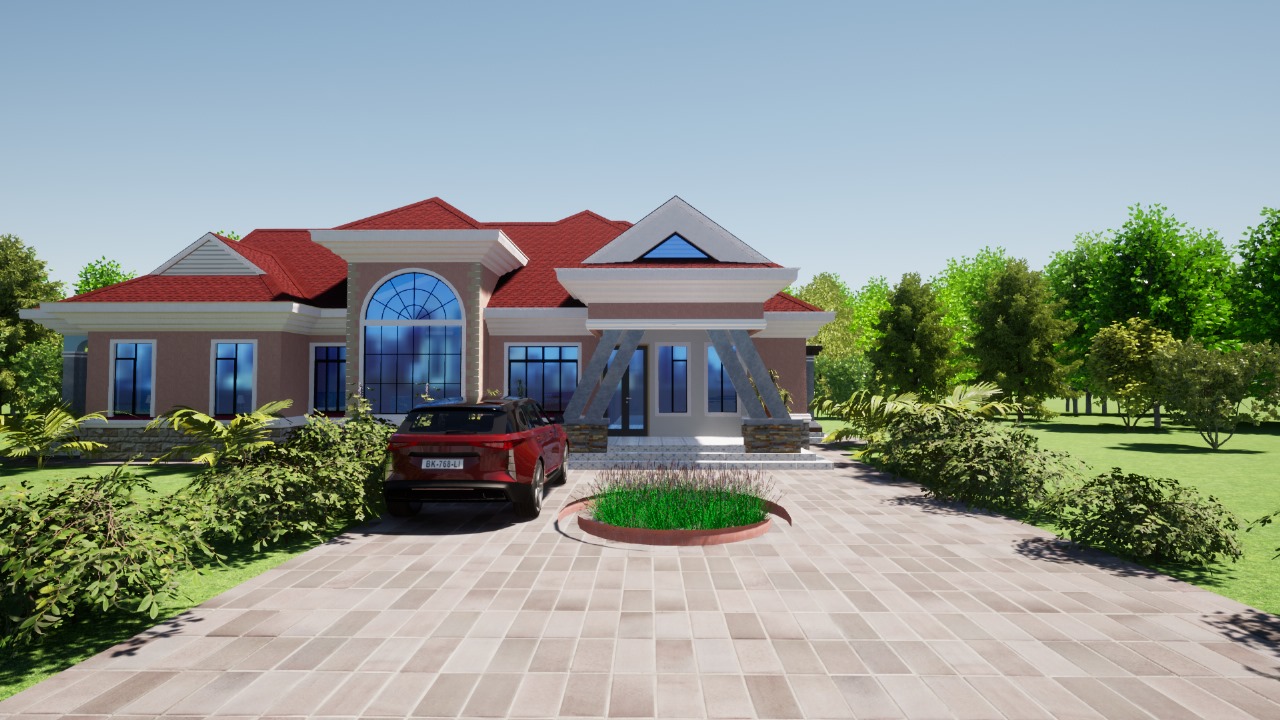
The second project was a 3-bedroom bungalow in Kocholia, Bungoma County.
The biggest challenge on this project was the location of the site.
The site was located deep within a rural village and was significantly more remote than we had anticipated during the preparation of the construction budget.
Unfortunately, we had not conducted a detailed physical site visit before preparing the budget.
This became one of the most important lessons from the project.
Challenge 1: High Transportation Costs
Because of the remoteness of the site, transportation costs became significantly higher than anticipated.
Materials had to travel longer distances to reach the construction site. Workers and supervisors also spent more time travelling to and from the project.
The actual amount of time spent travelling was much higher than what had been included in the budget.
In construction, time has a direct financial cost.
For example:
- Workers travelling for long distances lose productive working hours.
- Supervisors spend more time on the road.
- Transport costs increase.
- Material delivery becomes more expensive.
- Emergency purchases become difficult.
These costs may not appear clearly in a traditional BOQ.
However, they can significantly affect the profitability of a project.
Challenge 2: Failure to Conduct a Proper Site Visit Before Costing
The biggest mistake on this project was preparing the budget without first fully understanding the environment surrounding the construction site.
A physical site visit would have helped us understand:
- The actual road conditions.
- The distance from major towns and suppliers.
- Availability of construction materials.
- Availability of food.
- Transport requirements.
- Worker accommodation requirements.
- Security conditions.
Instead, some of these factors only became clear after construction had already started.
Lesson: Never Cost a Project Based Only on Drawings
Architectural drawings tell a contractor what needs to be constructed.
However, they do not explain:
- How difficult it will be to access the site.
- Where materials will come from.
- How workers will survive while working at the site.
- How far the nearest shops and suppliers are located.
A proper construction costing exercise should therefore start with a site reconnaissance visit.
Challenge 3: Food for Workers Was Not Included in the Budget
Another major challenge was feeding workers.
Food was not readily available near the site. Workers had to travel significant distances to purchase meals.
This created additional costs that had not been included in the original construction budget.
The cost was not limited to the price of food.
There were also indirect costs such as:
- Transport to buy food.
- Time spent travelling.
- Lost working hours.
- Higher daily expenses for workers.
Lesson: Worker Welfare Is Part of Construction Costing
Construction budgets often focus heavily on:
- Cement;
- steel;
- sand;
- ballast;
- stones;
- timber; and
- labour.
However, projects in remote areas require additional consideration.
Depending on the location, a contractor may need to budget for:
- Worker meals.
- Accommodation.
- Transport.
- Drinking water.
- Temporary sanitation facilities.
These are not always included in a traditional material BOQ, but they can have a major impact on the actual cost of construction.
3. A 3-Bedroom Bungalow in Siaya County
The third project was a 3-bedroom bungalow in Siaya County.
Once again, material availability became one of the biggest challenges.
Several essential construction materials were not readily available near the site, including:
- Sand;
- ballast;
- cement;
- timber; and
- roofing sheets.
This significantly increased the actual cost of construction.
Challenge 1: Limited Availability of Construction Materials
When materials are not available locally, they must be transported from other towns or counties.
This creates additional expenses, including:
- Transport charges;
- loading and offloading costs;
- delays;
- additional handling; and
- possible material losses during transportation.
Therefore, two identical houses may cost different amounts to construct simply because they are located in different parts of Kenya.
For example, a contractor may obtain cement, sand and ballast easily in one town but have to transport the same materials over long distances in another location.
Lesson: Location Has a Major Impact on Construction Cost
When preparing a construction estimate, contractors should avoid applying the same rates to every project location.
Instead, the costing should be adjusted according to:
- Local material availability.
- Distance from suppliers.
- Road accessibility.
- Transportation costs.
- Local labour availability.
Challenge 2: Poor Material Storage
The project also experienced problems relating to material storage.
Some materials, particularly cement, were damaged because of poor storage.
Cement is highly sensitive to moisture. If it is stored in unsuitable conditions, it can harden and become unusable.
Material wastage increases the cost of construction because the contractor must purchase replacement materials.
This means that material costing should include more than the purchase price.
A contractor must also consider:
- Storage facilities.
- Protection from rain.
- Handling procedures.
- Inventory management.
- Material losses.
Lesson: Materials Must Be Protected After Purchase
Purchasing construction materials is only the first step.
The contractor must ensure that the materials remain usable until they are required.
A project should therefore have a proper temporary storage plan before large quantities of materials are delivered.
Challenge 3: Theft and Poor Site Security
Security was another major challenge.
Due to inadequate site security, some construction materials were stolen.
Material theft is one of the hidden costs of construction projects.
If a contractor budgets for 100 bags of cement but several bags are stolen, the contractor must purchase additional cement.
The same problem can affect:
- Steel reinforcement.
- Timber.
- Roofing materials.
- Tools.
- Electrical materials.
- Plumbing materials.
Lesson: Security Is a Construction Cost
Site security should not be treated as an afterthought.
Depending on the project location, contractors may need to budget for:
- Security guards.
- Secure storage containers.
- Temporary fencing.
- Controlled access to the site.
- Material inventory systems.
A small investment in security can prevent significant financial losses.
Why Construction Costing Is Difficult in Kenya
Based on our experience from these three projects, we have identified several reasons why construction costing can be extremely difficult in Kenya.
1. Construction Materials Are Not Available Everywhere
Kenya has significant geographical differences.
A material that is easily available and affordable in Nairobi may be expensive in a rural area.
Similarly, stones that are suitable for construction in one region may not be available in another.
Therefore, construction material prices must be based on the specific project location.
2. Transportation Costs Can Change the Entire Budget
Transportation is one of the most underestimated construction costs.
The cost of transporting:
- stones;
- sand;
- ballast;
- cement;
- steel; and
- timber
can significantly affect the final cost of a project.
Contractors should therefore calculate the delivered-to-site cost, rather than relying only on supplier prices.
3. Site Conditions Are Not Always Visible on Drawings
A house plan does not show whether a site is:
- remote;
- difficult to access;
- far from suppliers;
- located on poor roads; or
- far from food and accommodation facilities.
This is why a physical site visit should be an essential part of construction costing.
4. Small Procurement Can Sometimes Increase Costs
Buying materials only when required may appear to reduce financial pressure.
However, for critical construction activities, insufficient material supply can cause:
- Work stoppages.
- Labour wastage.
- Emergency transport costs.
- Construction delays.
Proper procurement planning is therefore essential.
5. Hidden Costs Are Often Ignored
Many construction budgets focus on the visible costs of materials and labour.
However, hidden costs can include:
- Transport.
- Worker meals.
- Accommodation.
- Security.
- Storage.
- Material damage.
- Theft.
- Emergency purchases.
- Lost productivity.
These costs can significantly reduce a contractor’s profit.

Key Lessons West Kenya Real Estate Ltd Has Learned
Through these projects, we have developed several important lessons that now influence how we approach construction costing.
Lesson 1: Always Visit the Site Before Preparing the Final Budget
A physical site visit should be conducted before finalising the construction quotation.
The site visit should assess:
- Road accessibility.
- Material suppliers.
- Distance from towns.
- Availability of water.
- Security.
- Worker welfare requirements.
- Storage requirements.
Lesson 2: Prepare Location-Specific Cost Estimates
Construction costs should not be copied directly from one project to another.
Even when houses have similar designs, the project location may significantly affect the cost.
Every project should therefore have a location-specific estimate.
Lesson 3: Identify Material Sources Before Construction Begins
Before preparing the final budget, the contractor should identify where major materials will be sourced.
These include:
- Stones.
- Sand.
- Ballast.
- Cement.
- Timber.
- Roofing materials.
The actual delivered cost should then be calculated.
Lesson 4: Plan Critical Material Requirements in Advance
Materials required for major concrete and structural works should be available before work starts.
This reduces the risk of work stoppages and emergency purchases.
Lesson 5: Include Site Logistics in the Construction Budget
A complete construction budget should include logistics such as:
- Transport.
- Worker meals.
- Accommodation where necessary.
- Security.
- Storage.
- Material handling.
Lesson 6: Include a Contingency Allowance
Unexpected challenges are common in construction.
A reasonable contingency allowance can help manage:
- Price increases.
- Transport challenges.
- Material shortages.
- Unforeseen site conditions.
- Emergency purchases.
However, contingency should not be used as a substitute for proper planning.
Conclusion: A BOQ Is Important, but It Is Not Enough
Our experience at West Kenya Real Estate Ltd has demonstrated that a Bill of Quantities is an important construction management tool, but it is not the only requirement for accurate construction costing.
A BOQ can accurately calculate the quantity of cement, sand, stones, ballast and other materials required to construct a house.
However, it may not automatically account for questions such as:
- Where will the materials come from?
- How far are suppliers from the site?
- Are the materials available locally?
- Is the site easily accessible?
- Where will workers eat?
- How will materials be stored?
- How will the site be secured?
These questions can significantly affect the actual construction cost.
The three projects in Kibabi, Kocholia and Siaya taught us that construction costing is a combination of technical quantity measurement, market research, site investigation, procurement planning and practical project management.
The biggest lesson is simple:
You cannot accurately cost a construction project by looking only at the house drawings. You must also understand the environment in which the house will be constructed.
For clients, this is also an important reminder when comparing construction quotations.
The cheapest quotation is not always the most accurate quotation.
A realistic construction budget should consider not only what will be built but also the actual conditions required to build it.
At West Kenya Real Estate Ltd, every project continues to teach us something new. The challenges we have experienced have helped us improve our costing, planning, procurement and project management processes.
Construction is not simply about building structures.
It is about understanding the realities on the ground—and planning for them before construction begins.
Talk to West Kenya Real Estate about your house design or construction project 0724481087 or 0789217685 or email info@westkenyarealestate.com
West Kenya Real Estate Ltd
Professional House Design, Construction and Real Estate Solutions in Kenya.